Christ the Whale
John Moriarty's nautical view of the Passion

Sometimes my reading moods shift. I often cannot discern why. My mind will wander from one particular author to another without a clear sense of direction, focus, or purpose, but always with an underlying need, though almost always inarticulate and mysterious to me.
These moods are more and more becoming patterns, so I am beginning to see with more clarity.
My bookshelves are full of arguments on the surface- authors that, should they be thrown into a pub together, will alternatively cajole, scold, pound the table, upturn the chairs, order rounds, and generally engage in quite energetic disagreement with each other on points of doctrine, views on history, issues of battle and war, where the best pint of beer is brewed (Green Dragon or Beaver’s Dam?), and other salient points of human existence.
The undercurrent which flows through all the books and authors on my shelves and unites them all is this: Life is a holy adventure.
Realization of that stops me for a moment with a fair amount of gratitude.
As usual, it has been a tumultuous Lent for me. Lent has a habit of being apocalyptic. It reveals. And in this case, reveals much of me to me. I love turning outward to consume many different ideas, perspectives, experiences, and tastes. Turning inward? Not so much.
Therefore, whether it was running away from this, or in some weird way, trying to find a way to run back towards this, I once again picked up John Moriarty’s What the Curlew Said.
John Moriarty. What can be said of this wild Irish rover? I came to hear of him a few years ago, through the writing of Paul Kingsnorth and Martin Shaw (magnificent writers and storyteller themselves). He is alternatively labeled an Irish mystic, an Irish shaman, a seanchai, a philosopher. He describes his own work as incomprehensible and impenetrable- not meant for the publishing world at all. And yet, to dive into his works: Dreamtime, Invoking Ireland, Nostos, What the Curlew Said, to name a few, is to be saturated in myth, allusion, wide-sky, soil-rich, divine “silver-branch” thinking. Consider two brief proverbs of his: “All time is once-upon-a-time time” and “ All ground is Divine Ground.” Moriarty will take these ideas and weave them into hundreds of pages of reflection, each page plunging into greater depths than the last.
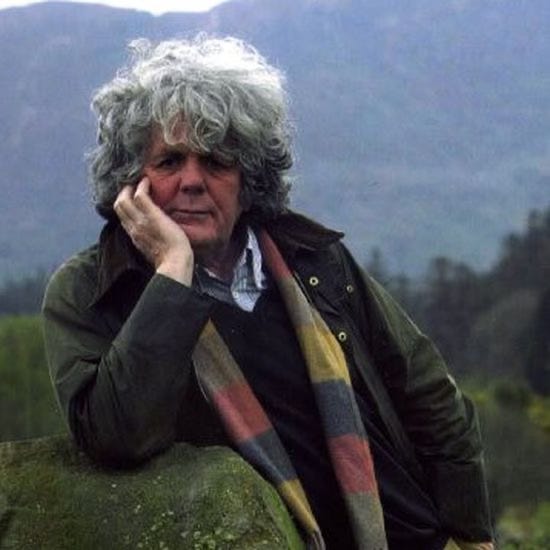
Reading Moriarty can be incredibly disconcerting at times, especially when one is inclined to desire a more anchored mindset. Ironically, it is just when I am desiring a more anchored and black and white mindset, or resolutely setting on my blinders to get through the day, that I am pulled into his prose. There’s got to be a bit of the Holy Spirit there.
Or more than a bit. Reading Moriarty during Holy Week this year has almost had a sense of the subversive to it- while others are more and more attuning themselves to readings specific to the season, I am escaping off into a wilderness of words, trailing Moriarty as he tramps through the forest of human existence. Fool of a Took that I am, this is a pleasant diversion, I think, and Mr. John is so sweet and rambling I won’t have to worry about any thoughts convicting me.
So of course on this Good Friday I come across that part of Moriarty’s writing in What the Curlew Said that speaks directly to the Passion.
Well-played, Paraclete.
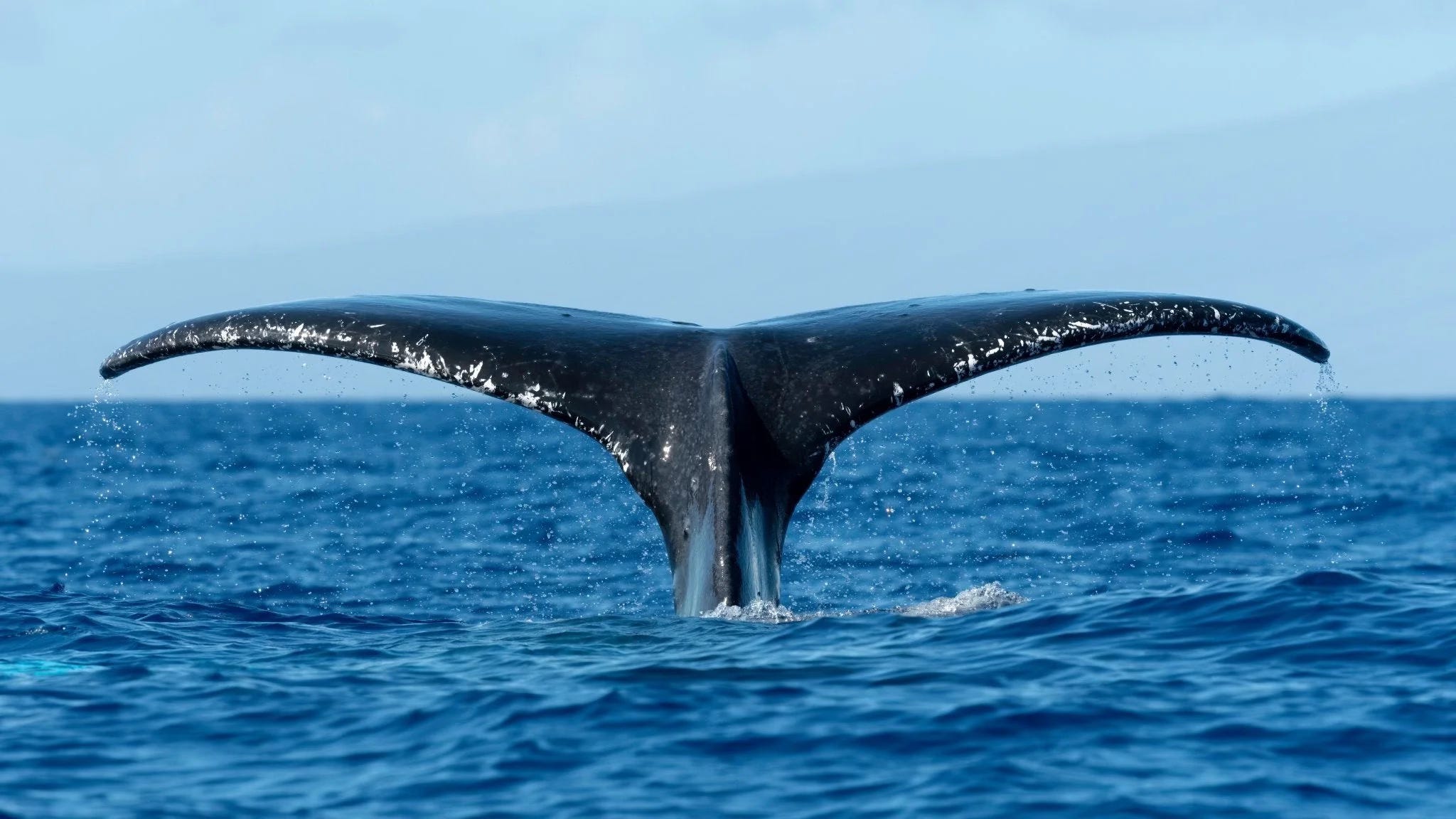
In this passage, he is initially speaking of Moby Dick and Melville’s graphic portrayal of the mincer slicing up whale blubber. The mechanic nature of the whale, now killed, portioned out for our consumption. He has spoken already about the madness of Ahab, and how indicative Ahab’s madness is to our destructive nature in general. How often do we lift the harpoon against Nature, against ourselves, against others? How often do we reduce the Whale to merely our own use and utilitarian benefit? When and how will this destruction and death stop? Then he writes:
“As though He had worked as a roughneck on a whaleship, Jesus knew what it would take: He must become Cetus Dei…He must expose His side to the harpoon that, when launched, generates Waste Lands…No ordinary physical fire, volcanic or stellar, could liquefy the harpoon. In nothing less than the vehemence of Christ’s Passion could it be overcome, back into ore in the mountain.”
Moriarty will do that sometimes. The allusions and connections circle around and then dive into the foreground of the text, like an osprey dropping from the sky. More often than not in his writing, steeped as it is in references and retellings and connections to the Nordic gods, the Babylonian deities, Aboriginal totems, Hindu mantras, and the sweat lodges of the Lakota, Christ is the One who goes deeper- “Canyon-deep” he calls it. Christ pulls all of humanity out of the temporal mire which goes down even into the Precambrian era.
Here, in this nautically envisioned Passion, Christ becomes the Whale-God in order to end the whaling of our hearts. The desire of His own heart is that the last spear go through his side, and that we are left free. Christ is not rising out of the depths as a nebulous animal-spirit, but rather “as though He had worked as a roughneck on a whaling ship.” In other words, Christ is He who has shared our Nature, who has felt the temptations and pressures and despair of our destructive, fallen Nature, but who was not fallen Himself. Christ is He who can become One with His creation, and canyon-deep, raise it up.
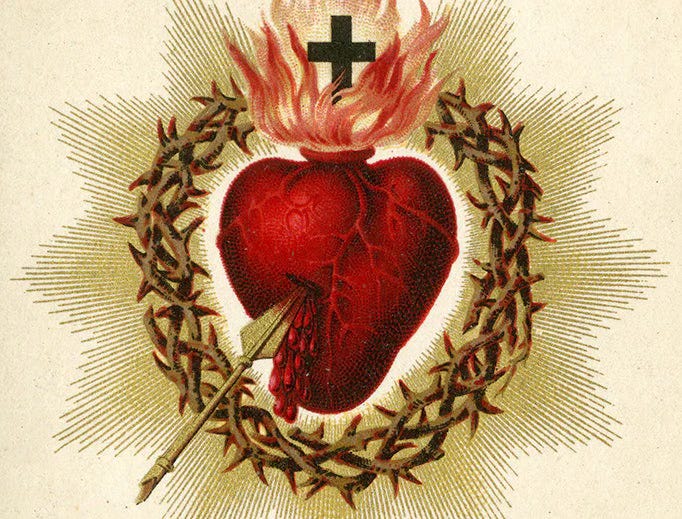
It’s Good Friday. The harpoon has been unleashed, and by His sacrifice and Love, it pierces His Sacred Heart, and spills out life.